Architectural, industrial, and smart lighting solutions engineered for peak photometric output and environmental longevity.
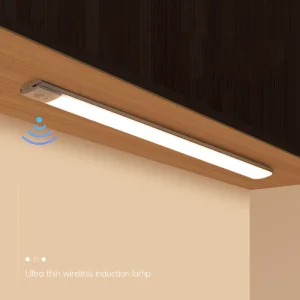
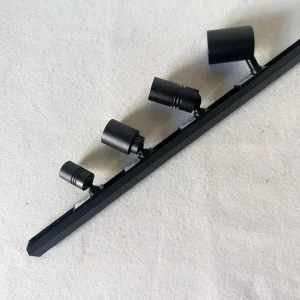
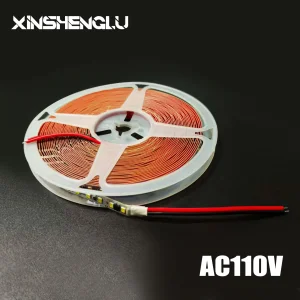
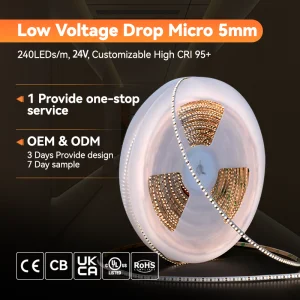
The contemporary global outdoor industrial sector has rapidly transitioned past rudimentary high-intensity discharge (HID) and metal-halide legacy systems. Modern commercial entities, logistics hubs, maritime terminals, and municipal planners require highly complex, robust solid-state lighting (SSL) frameworks. High-power outdoor LED floodlights now represent the central architecture in global sustainability transitions, directly impacting green building initiatives, municipal energy budgets, and overall operational safety.
Under the framework of Google's Search Quality Rater Guidelines, verifying true professional reliability means evaluating structural durability and real-world system efficacy. Modern industrial sites are no longer looking for generic, off-the-shelf fixtures. The demand has pivoted sharply toward high-level engineering customizability. The integration of solid-state components must withstand severe thermal stress, particulate loading, atmospheric salinity, and fluctuating electrical currents, while ensuring maximum systemic uptime and minimal luminous degradation over a decade-long service cycle.
Modern architectural and security infrastructures mandate systems that exceed 160 lm/W at system level, with a high color rendering index (CRI) and ultra-tight MacAdam Ellipse consistency.
Verified performance indicators that delineate industry-grade outdoor luminaires from consumer-grade alternatives.
A rigorous technical breakdown of the sub-components and materials involved in crafting high-reliability floodlighting solutions.
Thermal management is the single most critical factor in mitigating LED lumen decay. High-efficacy custom OEM floodlights utilize high-pressure, die-cast ADC12 and A380 grade aluminum housings featuring engineered thermal convective fins.
These flow patterns are thoroughly analyzed using Computational Fluid Dynamics (CFD) models to prevent localized heat islands at the junction points of the high-power SMD arrays. Coupled with premium high-conductivity thermal interface materials (TIM) yielding >5.0 W/mK values, the operational junction temperature (Tj) is safely restricted to below 75°C, ensuring robust system reliability even in extreme ambient environments exceeding 50°C.
Standard municipal and structural requirements demand precise target illumination to completely avoid light pollution and glare indexes. We develop specialized optic packages with symmetrical beam vectors (10°, 30°, 60°, 90°, 120°) and highly complex asymmetrical distributions (Type II, III, IV, V, and 60°x120° polar coordinate designs).
Each custom design uses premium, high-transmittance, UV-stabilized Polycarbonate (PC) or PMMA lens arrays. These materials yield a 94%+ light transmission efficiency, significantly improving localized light concentration on active transportation, port operations, and industrial target zones while strictly preventing peripheral spill-light.
The power driver functions as the heart of any high-power outdoor LED floodlight system. Commercial systems rely on industry-standard drivers (such as MeanWell, Inventronics, Sosen, and Philips) featuring comprehensive power-factor correction (PFC >0.97) and ultra-low total harmonic distortion (THD <10%).
To withstand violent atmospheric disturbances, sudden grid load switching, and severe lightning strikes, these driver enclosures are integrated with heavy-duty surge protection devices (SPDs) rated up to 10kV/20kV. They also include self-recovering thermal protective shutdowns, over-voltage limits, and smart short-circuit defense loops.
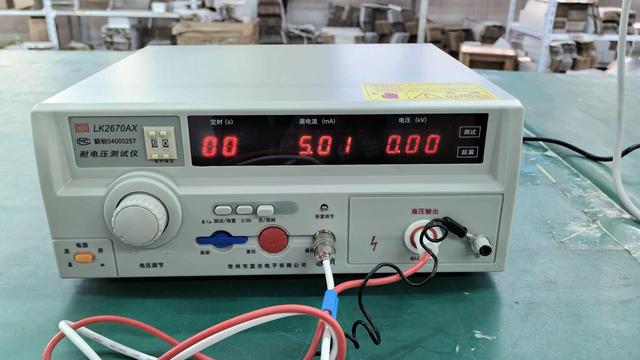
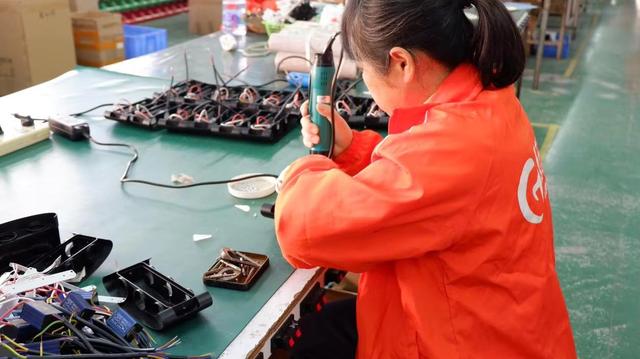
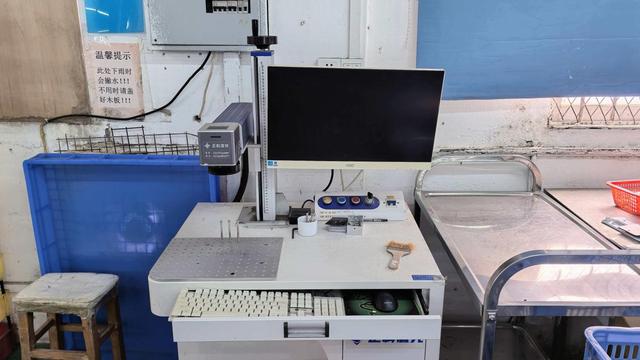
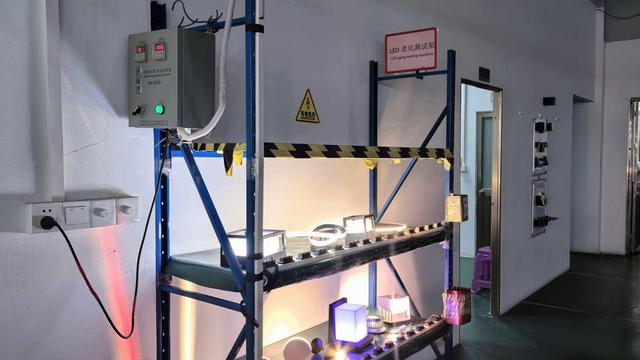
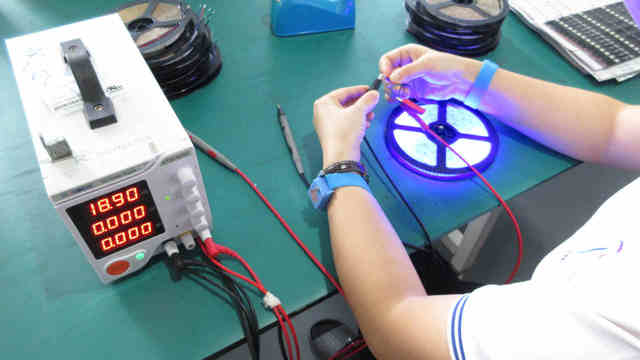
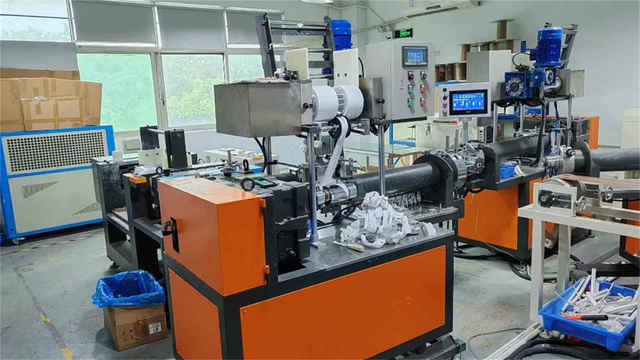
The modern supply chain for optoelectronic manufacturing requires deep structural integration. Guangzhou VELORIQ Light Co., Ltd. exemplifies this comprehensive industrial convergence. Established in 2014, our state-of-the-art facility covers over 8,000 square meters in the heart of Guangzhou, China. By deploying over 120 highly skilled technicians, operators, and Quality Assurance managers, VELORIQ runs a highly optimized production center specialized in handling both heavy-duty industrial fabrications and bespoke customer specifications.
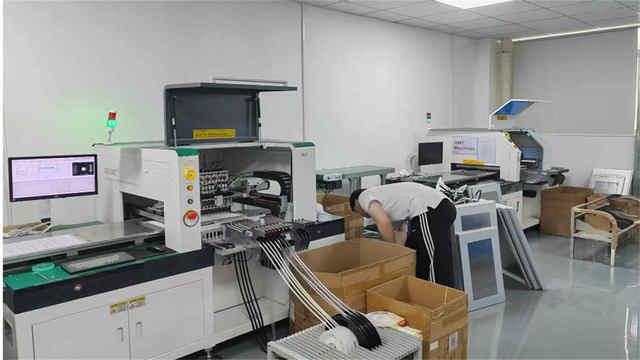
Our localized ecosystem is highly structured. From advanced precision die-casting foundries and high-speed automated SMT surface-mounting lines, to electrostatic powder-coating plants and integrated CNC machining systems, every manufacturing step is concentrated in our Guangzhou hub. This close physical convergence dramatically reduces lead times for complex, tooling-intensive custom fabrications. It also eliminates the vulnerability of trans-provincial component shipping, and guarantees unparalleled consistency across every batch of outdoor floodlight systems we deliver globally.
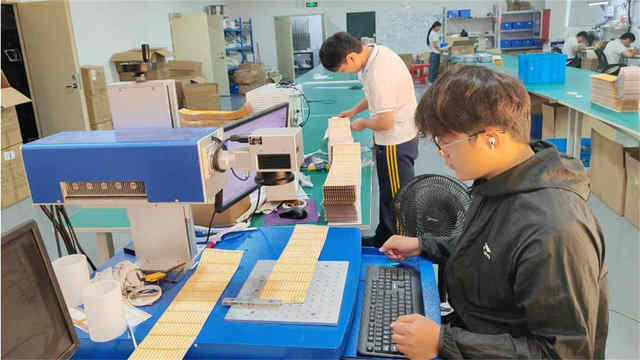
A premier global developer of energy-efficient commercial, industrial, and specialized architectural illumination frameworks.
How customizable high-performance LED floodlights are optimized to withstand distinct regional and mechanical stress challenges.
Architectural facade lighting requires precise color mixing, high fidelity, and dynamic programmatic controls. Custom RGBW LED floodlights integrate seamlessly with DMX512 dynamic master units, supporting complex light shows, smooth transitions, and high-speed dimming profiles.
These configurations use specialized narrow-angle optics (down to 5° or 8°) to target vertical facade sections without creating ambient spill-light into adjacent residential windows, strictly adhering to regional dark-sky regulations.
Marine port terminals present some of the harshest outdoor conditions, characterized by high wind loads, extreme humidity, and highly corrosive sea spray. High-mast floodlighting systems in these settings require robust engineering.
We apply specialized multi-layer C5-M marine-grade anti-corrosion protective coatings to the die-cast housings, paired with SUS316 stainless-steel installation hardware. This guarantees complete resistance to structural salt-spray oxidation, while the low-drag housing profiles are certified to withstand intense Category 15 typhoons (up to 60m/s wind vectors).
Petrochemical processing plants, refineries, and grain silos present volatile environments where combustible gases, vapors, or dust concentrations are frequently present. Standard outdoor luminaires risk triggering dangerous ignition sequences in these areas.
Custom explosion-proof floodlights are engineered with spark-resistant, explosion-isolation internal compartments. Combined with premium heat dissipation arrays, they maintain surface temperatures well below volatile flash points, meeting strict ATEX, IECEx, and UL844 hazardous area safety standards.
Entering international commercial markets requires strict adherence to regional safety, efficiency, and environmental regulations. Professional solid-state floodlight deployments must carry appropriate safety markings to guarantee real-world performance under severe field stresses. Guangzhou VELORIQ Light Co., Ltd. builds and tests all our hardware platforms to comply with global standards, ensuring seamless project approvals and long-term operational safety.
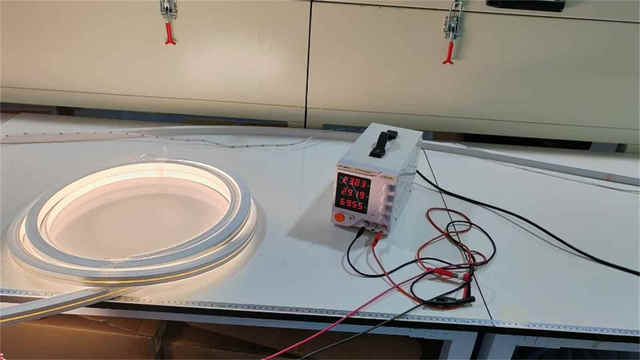
In North American commercial sectors, systems are built to meet rigorous UL1598 (Luminaires) and CSA C22.2 standards, complemented by DesignLights Consortium (DLC) Premium listings for local utility rebate eligibility. In European markets, our platforms are engineered to meet CE, GS, RoHS, and ENEC requirements, confirming strict compliance with electromagnetic compatibility (EMC), low voltage directives (LVD), and hazardous material restrictions. Each production run undergoes extensive thermal-overload tests, automated ingress simulation, and high-voltage isolation screening before leaving our facility.
Our complete manufacturing pipeline maintains strict adherence to verified international criteria:
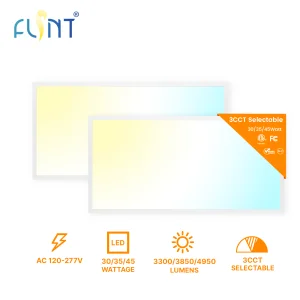
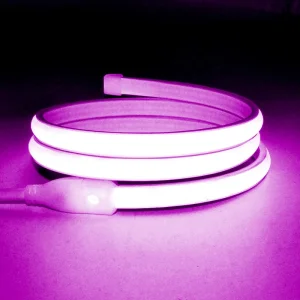
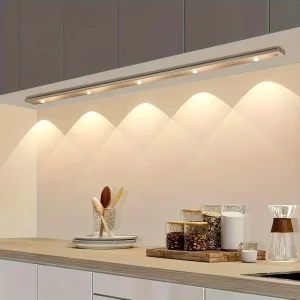
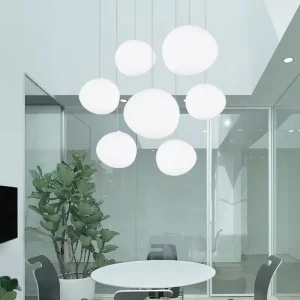
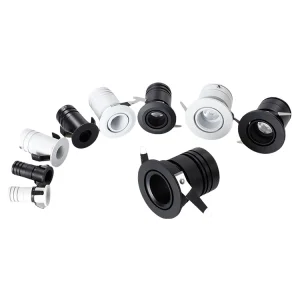
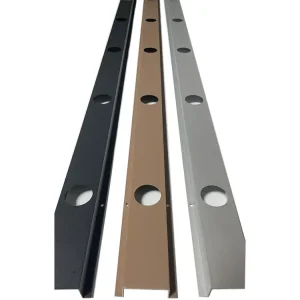
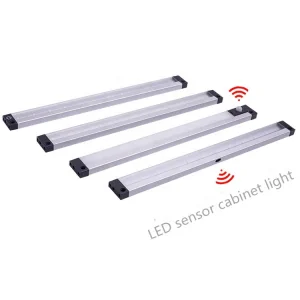
An advanced selection of energy-efficient solid-state luminaires, built with premium materials for commercial and architectural interiors.
Essential technical engineering answers regarding custom high-power outdoor LED floodlight procurement, design, and operations.
High-pressure die-cast aluminum (specifically ADC12 and A380 grades) offers an optimal balance of structural strength and thermal conductivity (~96-116 W/m·K). This superior thermal transfer performance is essential for rapidly dissipating heat away from high-power LED junctions. Standard sheet metal or cast irons lack the necessary thermal conductivity, leading to accelerated LED junction breakdown, color shifting, and early system failure.
Asymmetrical distribution uses custom-shaped optical lenses to direct light precisely onto the target ground area (e.g., a roadway, parking lot, or sports field) rather than dispersing it in a standard, symmetrical cone. This targeted approach prevents upward light leakage (a major contributor to urban light pollution) and minimizes side glare. By concentrating lumens exactly where they are needed, system planners can achieve identical target lux levels using up to 40% less electrical power than traditional symmetrical fixtures.
Coastal environments contain high concentrations of airborne sea-salt particles, which act as aggressive electrolytes that rapidly corrode standard metals. Standard architectural powder coatings quickly degrade in these conditions, leading to bubbling, cracking, and eventual housing failure. C5-M class coatings are high-thickness, multi-layer epoxy-polyester powder systems specifically formulated to withstand continuous exposure to high humidity, marine salinity, and chemical pollutants, ensuring decades of structural integrity.
Junction temperature (Tj) is the absolute temperature at the core of the LED semiconductor chip. As Tj rises due to poor thermal dissipation, it accelerates the degradation of both the semiconductor crystal structure and the surrounding phosphor conversion layer. Maintaining Tj below 75°C keeps the system well within the parameters tested under LM-80, allowing the fixture to achieve its projected L70 lifespan of 100,000+ hours. Operating at higher temperatures (e.g., above 100°C) dramatically shortens the LED's life, resulting in rapid brightness loss and color shifts.
At VELORIQ, our custom tooling phase begins with rigorous 3D modeling and Finite Element Analysis (FEA) to simulate mechanical stress and thermal dissipation. Once prototype housings are cast in our Guangzhou facility, they undergo comprehensive testing in our on-site labs. This includes goniophotometric evaluations, integrating sphere color analysis, high-temperature environmental baking, water immersion simulation, and drop testing. Tooling designs are only approved for full mass production after passing every rigorous performance benchmark.
Integrating these protocols enables digital, bidirectional communication with each luminaire. DALI-2 provides precise 0.1% to 100% dimming control, individual fixture status reporting, and seamless integration with building automation systems. For dynamic color changing, high-speed wall washes, or theatrical facade lighting, DMX512 offers the high-speed data transmission required to control complex lighting patterns across hundreds of fixtures in real time.
 VELORIQ Lighting