Engineered for mission-critical illumination parameters, featuring premium color fidelity and advanced structural integration.
Deconstructing the commercial intent and qualitative criteria for enterprise-scale lighting imports.
In the contemporary B2B architectural procurement landscape, sourcing LED under cabinet lights transcends simple price-per-unit evaluation. International enterprise buyers—including commercial real estate developers, premium hospitality chains, architectural millwork firms, and major lighting wholesalers—demand systemic integrity, photobiological precision, and bulletproof regulatory compliance. The shift toward custom, high-density residential developments and smart commercial office environments has fundamentally altered the parameters of the ideal lighting fixture.
Millwork firms require low-profile, ultra-thin extrusions that disappear into custom cabinetry without disrupting architectural lines or requiring excessive routing depths.
High-end hospitality and retail environments mandate exceptional color rendering indexes (CRI > 90, R9 > 50) to guarantee true-to-life representation of materials and assets.
Procurement directors optimize for manufacturers that utilize standardized electronic components, providing consistent color binning and predictability across project phases.
When engineering firms search for a China Best LED Under Cabinet Light Factory or Supplier, their underlying intent is rooted in minimizing project risk. They require advanced technical documentation, including IES files for DIALux modeling, LM-79 luminous flux reports, and verified thermal dissipation testing. A reliable supplier must serve not merely as an assembly shop, but as an engineering partner capable of modifying drivers, customizing wire harnesses, and executing precise MacAdam ellipse color binning configurations.
An Authoritative Architectural and Commercial LED Manufacturing Paradigm
Established in 2014, Guangzhou VELORIQ Light Co., Ltd. has cemented its reputation as a leading-edge designer and high-capacity OEM/ODM lighting manufacturer. Situated strategically within the industrial manufacturing hub of Guangzhou, China, the company steers an advanced infrastructure spanning over 8,000 square meters of specialized production area. The enterprise deploys a highly skilled workforce exceeding 120 technicians, engineers, and quality assurance specialists dedicated to pushing the performance boundaries of indoor illumination.
VELORIQ operates under a stringent total quality management architecture, running state-of-the-art SMT (Surface Mount Technology) lines, automated optoelectronic testing systems, and robust environmental aging chambers. This rigorous framework guarantees that all manufactured batches satisfy the exacting structural, electrical, and photobiological demands of the international market.
VELORIQ acts as a critical tier-1 manufacturing partner for global importers, construction contractors, lighting wholesalers, and independent design brands by providing comprehensive customization verticals:
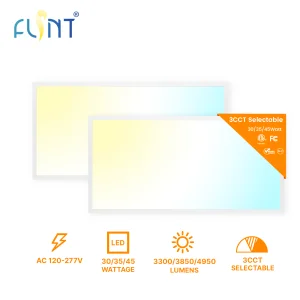
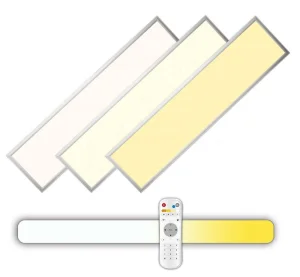
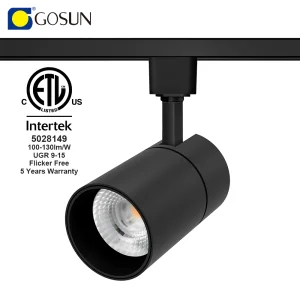
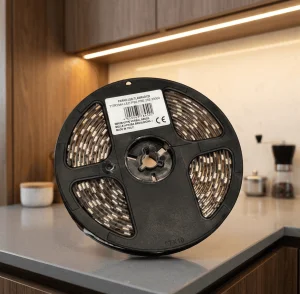
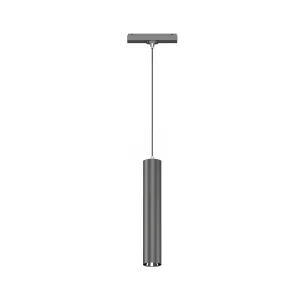
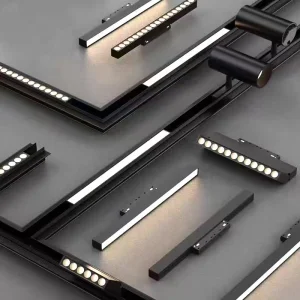
While specializing in high-performance linear and cabinetry lighting, VELORIQ’s versatile core competencies encompass a vast ecosystem of commercial and residential fixtures. This includes high-efficiency LED ceiling lights, architectural LED panel lights, recessed low-glare LED downlights, high-CRI LED track lights, minimalist LED pendant systems, indoor wall fixtures, high-density flexible LED strip lights, and smart magnetic track rail matrix solutions. This unified design vocabulary empowers clients to execute multi-tier lighting designs seamlessly across diverse spaces like residential complexes, premium hotels, shopping plazas, and retail hubs.
The science of premium cabinet lighting: Thermal limits, optoelectronics, and micro-sensing integration.
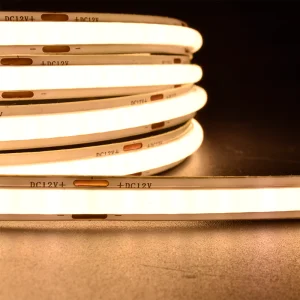
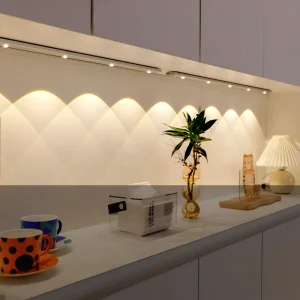
The technical roadmap for cabinet illumination focuses heavily on achieving a continuous, uninterrupted line of light without harsh, pixelated hotspots. Traditionally, high-density SMD (Surface Mounted Device) 2835 or 5050 strips combined with milky polycarbonate diffusers were utilized to minimize glare. However, modern architectural procurement is leaning rapidly toward COB (Chip-on-Board) technology.
COB configurations deposit hundreds of individual LED diodes directly onto a linear flexible substrate encapsulated under a continuous phosphor gel layer. This layout yields a truly "dotless" linear output. This is vital when illuminating highly reflective kitchen countertops like polished granite, quartz, or stainless steel, which act as mirrors that accentuate any imperfections or hot-spots in the diode spacing.
Operating cabinet lights enclosed within millwork recesses introduces significant thermal insulation challenges. Standard low-cost PVC substrates decay quickly under continuous heat, precipitating dramatic lumen degradation and color shifting (usually shifting toward a harsh blue hue). Professional grade fixtures utilize heavy-duty 6063-T5 aviation anodized aluminum profiles.
The aluminum housing functions as a critical passive heat sink. It draws thermal energy away from the p-n junction of the LED chip, keeping junction temperatures well below 65°C. This meticulous engineering directly ensures the fixture achieves an operational lifespan exceeding 50,000 hours, certified under LM-80 testing criteria.
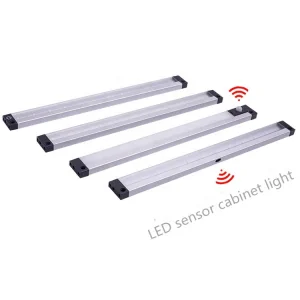
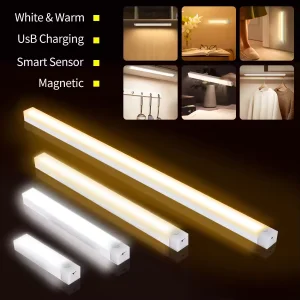
Modern under-cabinet lighting is intrinsically tied to human-centric smart automation. Standard mechanical switches are being replaced by contact-free, low-voltage control sensors built directly into the aluminum extrusion housing:
These sensors accurately detect structural heat signatures moving within a designated 120-degree field of view. They trigger illumination automatically when an operator approaches a kitchen workspace and dim down or shut off after a preset period of inactivity, substantially optimizing energy efficiency.
Optimized specifically for culinary environments where users often have wet or soiled hands, these modules toggle states based on short-range light interruption within a 1-5 cm range. Additionally, holding a hand stationary above the sensor instructs the internal microcontroller to execute smooth, step-less dimming.
Mitigating voltage attenuation, managing phase dimming, and scaling long-run architectural layouts.
In large-scale commercial installations, such as sprawling resort hotels or multi-family residential towers, lighting engineers encounter significant challenges with voltage attenuation in long-run linear configurations. Understanding the electrical differences between 12V and 24V topologies is critical during the initial electrical design phase:
| Engineering Parameter | 12V DC Infrastructure | 24V DC Infrastructure |
|---|---|---|
| Maximum Linear Run Length | Typically capped at 5 meters before noticeable voltage drop occurs. | Extended up to 10 meters with perfectly uniform luminous intensity. |
| Current Load & Conductor Heat | Higher current load; requires heavier gauge copper wiring to prevent heating. | Halved current requirement; significantly reduces thermal stress on components. |
| Minimum Cutting Trimming Unit | Shorter step increments (approx. 2.5cm), excellent for precise display cases. | Slightly wider step increments (approx. 5-10cm), ideal for macro millwork. |
Furthermore, integrating under-cabinet lighting with centralized building management systems (BMS) demands versatile driver engineering. VELORIQ drivers are engineered to support various dimming protocols, ensuring silent, flicker-free performance down to 0.1% for high-definition filming and zero-audible-noise compliance in luxury spaces.
Navigating cross-border electrical requirements, safety testing, and local import criteria.
When high-volume B2B buyers source from a China LED under cabinet light factory, compliance verification is paramount. Entering major global markets requires passing rigid international testing metrics to confirm fire safety, electromagnetic compatibility, and energy efficiency:
Requires rigorous adherence to UL 2108 (Low Voltage Lighting Systems standards) and CSA C22.2 tracking. Compliance verifies driver isolation parameters, safeguarding commercial structures against catastrophic electrical fires.
Mandates comprehensive testing across EN 55015 for electromagnetic disturbance and strict compliance with New ErP directives. This demands clear energy labels, eco-design compliance, and documented circular-economy recyclability.
Demands verified conformance with AS/NZS standards, specifically targeting insulation rating parameters and localized electrical plug top configurations for Australian and New Zealand commercial installations.
VELORIQ eliminates regulatory hurdles for international partners by maintaining an organized technical file library. This database includes updated CE, GS, RoHS, SAA, and ETL qualifications, enabling smooth custom clearance and fast turnaround times for discerning developers globally.
Inside our production ecosystem: Traceable assembly lines, high-speed SMT placement, and meticulous quality gates.
Operational transparency forms the cornerstone of sound B2B partnerships. VELORIQ invites global procurement teams to inspect our verified factory floor layout, where every manufacturing station follows lean manufacturing principles and clear standard operating procedures (SOPs):
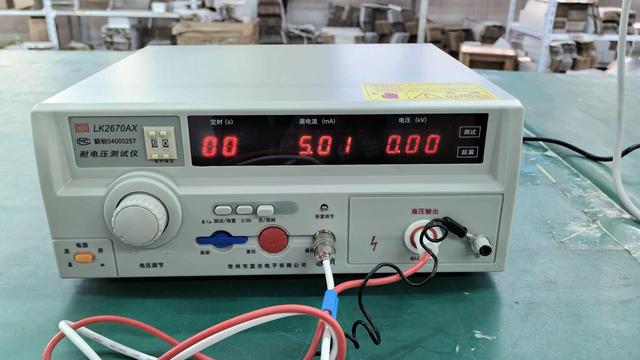
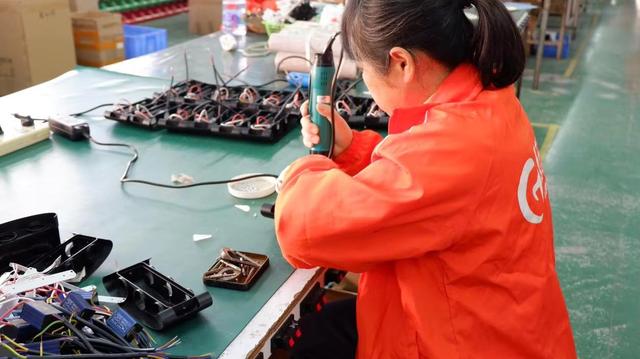
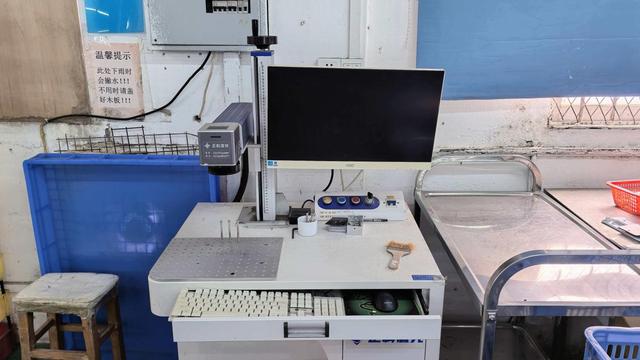
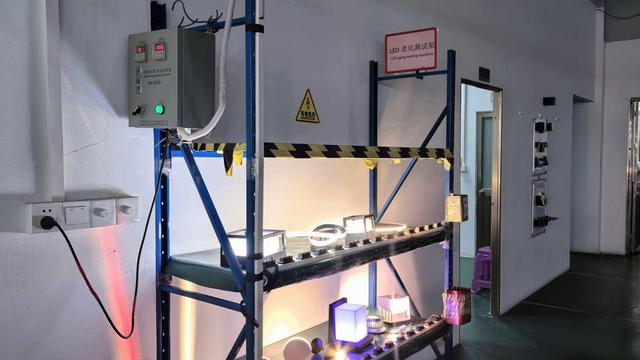
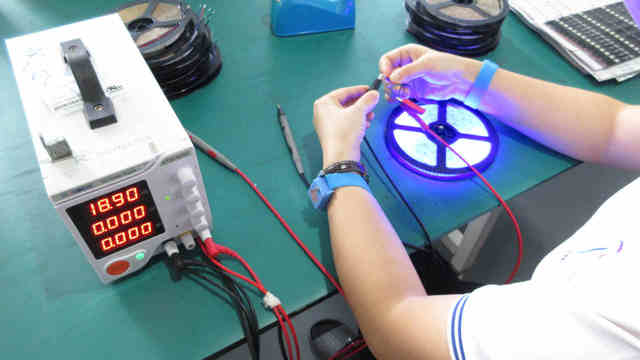
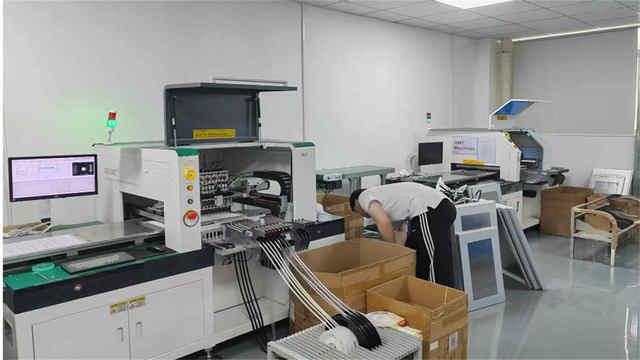
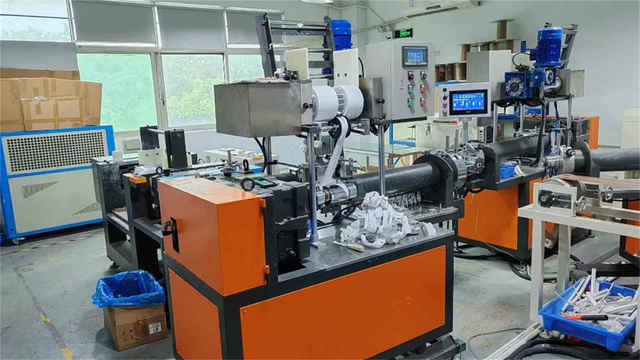
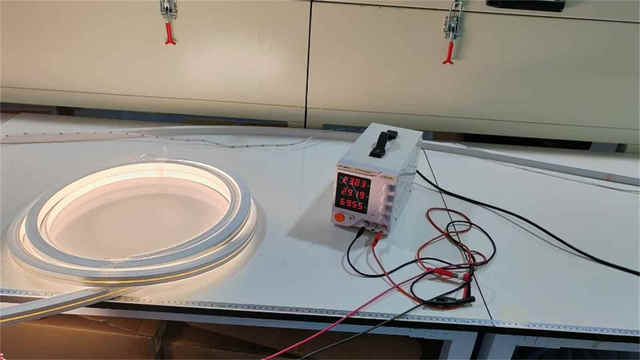
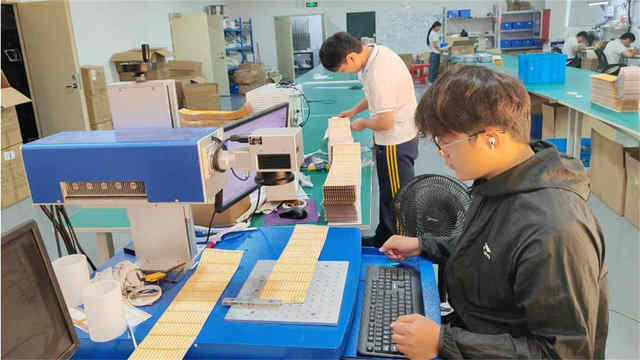
This structured production setup supports our fast-track manufacturing models, enabling us to handle sudden inventory surges or compress lead times on complex projects without compromising product quality.
Addressing the technical, logistics, and engineering questions posed by enterprise procurement managers.
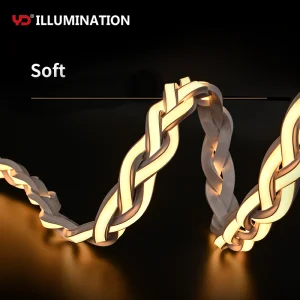
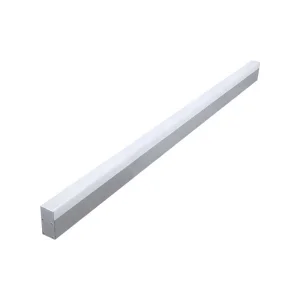
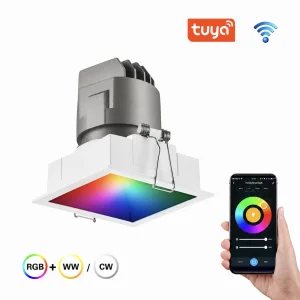
Explore our comprehensive selection of smart downlights, waterproof strips, and customizable lighting options.
 VELORIQ Lighting