Choosing bedroom lighting is less about buying the brightest fixture. It is about creating comfort, visibility, and control in the same room. So, what is the best lighting for bedrooms? The practical answer depends on your routine, room size, ceiling height, and personal sensitivity to light. A warm ceiling fixture can provide gentle general illumination. Bedside lamps support reading without flooding the entire room. Soft accent lighting can highlight curtains, artwork, or a textured wall.
Think in layers.
Professional lighting practice usually combines ambient, task, and accent lighting. Warm bulbs between 2,700K and 3,000K often feel relaxing before sleep. A dimmer helps you lower brightness gradually during your evening routine. For reading, choose a shaded lamp that directs light onto the page, not into your eyes. An adjustable wall light can save bedside space and reduce harsh shadows. Look for reliable products with clear wattage, color temperature, safety certifications, and replaceable bulbs where possible.
Small details matter. A lamp beside the bed should sit near shoulder height when you are seated. Light spilling under the door may disturb a light sleeper. Test the fixture at night before deciding. It may look attractive online but feel too bright in person. There is no perfect formula. I have found that users often change their preferences after living with a setup for several evenings. This guide explains how to compare fixtures, avoid common mistakes, and build a bedroom lighting plan that feels calm, useful, and genuinely personal.
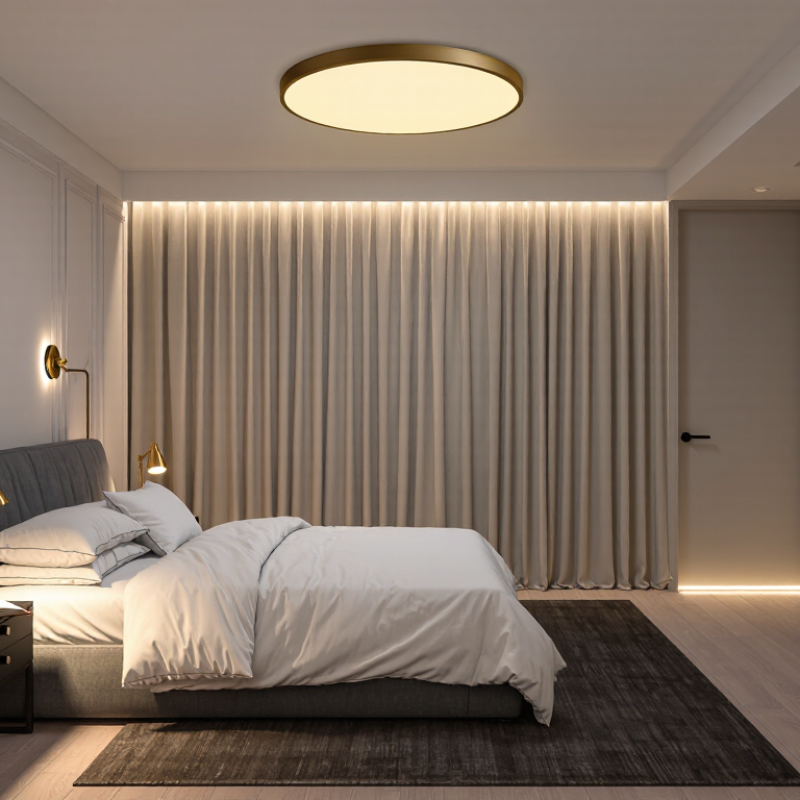
Choosing bedroom lighting starts with observing real routines, not copying a showroom design. Track each activity for one week: waking, dressing, reading, working, relaxing, and sleeping. A desk needs focused light, while bedside reading needs a controlled beam that does not disturb a partner. In practical lighting assessments, glare often causes more discomfort than insufficient brightness. That detail is easy to miss.
Use layered lighting. Add soft ambient light, adjustable bedside fixtures, and low-level pathway lighting. The Illuminating Engineering Society advises matching illuminance to the visual task, rather than treating every room equally. For evening use, choose warmer light and reduce brightness gradually. The CIE Position Statement on Integrative Lighting (2019) links daily light-dark patterns with circadian health, although individual responses vary. There is no perfect color temperature for everyone.
Controls matter as much as the lamp. Dimmers, separate switches, and motion sensors let the room change with your schedule. The U.S. Department of Energy reports that LED lighting uses at least 75% less energy and lasts up to 25 times longer than incandescent lighting. Still, efficiency does not guarantee comfort. A bright ceiling fixture may save energy while making bedtime feel harsh. Test light at pillow height, beside the wardrobe, and near the floor. I would also reassess the setup after a week; real habits often reveal design mistakes.
A bedroom needs more than one bright ceiling fixture. Use layered lighting instead. Ambient lighting provides general visibility through a ceiling lamp or soft flush mount. Task lighting supports reading, dressing, or finding items in a drawer. Bedside sconces or adjustable table lamps work well because they keep light near the activity. Accent lighting can highlight artwork, wall texture, or a quiet corner without dominating the room.
Warm, dimmable light usually feels more comfortable before sleep. The International Commission on Illumination explains that evening light exposure can affect circadian rhythms, especially when it is bright and blue-rich. Choose bulbs around 2700K to 3000K for evening use, then reduce brightness gradually.
The U.S. Department of Energy reports that LED lamps use at least 75% less energy and last up to 25 times longer than incandescent lamps. That makes LEDs practical for bedside and ceiling fixtures.
Tips: Install separate switches for ambient and bedside lighting. Place reading lights slightly behind your shoulder to reduce glare. Keep bulbs shielded from direct eye contact. Test the room at night, not only during the day. I once chose a beautiful pendant that cast harsh shadows across the bed; appearance was not enough. No lighting plan is perfect. Your sleep habits, ceiling height, and wall colors may require adjustment. Check the result for several evenings before changing everything.
How to Choose the Best Lighting for Bedrooms?
Match Light Color and Brightness to Sleep Habits
Bedroom lighting should follow your sleep routine, not only your décor. Warm light around 2200K to 2700K usually feels softer during evening activities. It can make reading, stretching, or preparing for bed feel less stimulating. Keep brightness adjustable. A gentle glow may suit early sleepers, while night owls might need stronger light before winding down. However, very dim lighting can strain your eyes during reading. Comfort matters more than a fixed rule.
Your morning light should feel clearer and more energetic. A neutral white setting around 3000K to 4000K can help you see clothing, organize a room, or prepare for work. Avoid placing bright fixtures directly above your pillow. Side lamps create fewer harsh shadows. In practical bedroom planning, I often recommend testing lighting from the bed, not only from the doorway. The result can be surprisingly different. I still find that one setting rarely suits every season or schedule.
Tips
Use warm, low brightness during the final hour before sleep. Choose a dimmer for flexible control. Place a reading lamp near your shoulder, with the beam aimed at the page. If you wake at night, use a very dim amber light. Avoid checking a bright screen immediately afterward. Track how quickly you relax for several nights, then adjust slowly. Your first choice may be wrong. That is useful information.
Good bedroom lighting starts with placement, not fixture style. Use three layers: ambient, task, and accent lighting. Place the main ceiling fixture near the room’s center for even coverage. Avoid positioning it directly above pillows, where glare can disturb tired eyes. The Illuminating Engineering Society recommends combining general and task lighting for residential comfort, rather than depending on one bright source. That advice feels practical after living with uneven bedside shadows.
Bedside fixtures should sit slightly behind your shoulders when reading. Their switches must be reachable without leaving the bed. Wall-mounted lights can free nightstand space, but installation height needs careful testing. A flexible reading arm should illuminate the page, not your partner’s face. For dressing areas, place vertical fixtures beside the mirror. Overhead-only lighting often creates unhelpful shadows.
Tips: Measure before drilling. Sit on the bed and test the beam angle. Check the light from standing, reading, and lying positions. Dimmers help, but they are not magic. A poorly placed fixture remains poorly placed at a lower brightness. Choose warm light for winding down and brighter, cooler light for morning routines. The U.S. Department of Energy reports that LED lighting uses at least 75% less energy and lasts up to 25 times longer than incandescent lighting. That efficiency supports longer nightly use, although comfort should guide placement first. Some bedrooms still need more light near closets. IES guidance deserves adaptation to real furniture, not blind obedience.
When comparing bedroom lighting, start with useful brightness, not wattage. Lumens show light output, while watts show electricity use. An efficient LED lamp can provide comfortable brightness with less energy. Look for strong lumens-per-watt performance and a color temperature around 2700–3000K. Warm light often feels calmer before sleep. It is not a universal rule.
Controls deserve equal attention. A dimmer can reduce evening glare and lower energy use. Check that the lamp and dimmer are compatible. Poor matching may cause flickering, buzzing, or a narrow dimming range. Small details matter. Occupancy sensors can turn lights off when the room is empty. Timers help prevent lights staying on overnight. I prefer controls that remain simple during a sleepy midnight visit. App-based controls can be useful, but they may add setup problems and privacy concerns.
Safety should be checked in the actual room. Choose fixtures tested by a recognized safety laboratory and follow local electrical requirements. Keep fabric, bedding, and paper away from hot surfaces. Do not cover a fixture with clothing or blankets. Inspect cords for cuts, loose plugs, or crushed sections. A night-light should use low heat and sit firmly near the floor. I have sometimes focused too heavily on appearance and overlooked switch placement. That mistake matters when reaching for light beside a dark bed. Never install a fixture beyond the ceiling box’s rated load.
| Lighting Option | Typical Power | Approximate Efficacy | Expected Life | Energy Efficiency | Control Options | Bedroom Comfort | Key Safety Features | Best Use |
|---|---|---|---|---|---|---|---|---|
| Warm-White LED Bulb | 6–12 W for approximately 800–1,600 lumens | 80–140 lumens per watt | Approximately 15,000–25,000 hours | Excellent; uses substantially less electricity than incandescent lighting for similar brightness | On/off switch, dimmer-compatible models, timers, occupancy sensors, and compatible smart controls | Choose 2,700–3,000 K for a warm, relaxing atmosphere; high color-rendering models improve visual comfort | Look for appropriate electrical certification, enclosed-fixture compatibility where required, and protection against overheating | General ambient lighting, bedside lamps, and ceiling fixtures |
| Dimmable LED Fixture | 10–25 W for approximately 1,000–2,500 lumens | 80–120 lumens per watt | Approximately 25,000–50,000 hours | Excellent; efficient at both moderate and high brightness levels | Wall dimmer, remote control, scene control, occupancy sensor, and scheduled operation | Useful for switching between reading light and low-level evening light; select low-flicker products | Use a dimmer specifically rated for LED loads; install securely and maintain required clearance around the fixture | Primary ceiling lighting and rooms requiring flexible brightness |
| Smart LED Bulb or Fixture | 7–15 W for approximately 800–1,500 lumens | 70–110 lumens per watt | Approximately 15,000–25,000 hours | Very good; energy savings depend on brightness, schedules, and standby consumption | App, voice control, wireless remote, schedules, geofencing, scenes, and occupancy automation | Can provide warm dimming and automatic evening schedules; avoid bright or cool light near bedtime | Use secure network settings, a reliable manual override, and products approved for the intended voltage and fixture type | Automated bedrooms, accessibility needs, and layered lighting systems |
| LED Night-Light | 0.3–1.5 W for approximately 10–100 lumens | 50–100 lumens per watt | Approximately 15,000–30,000 hours | Outstanding for low-level nighttime illumination | Light sensor, motion sensor, timer, or continuous low-level operation | Red or amber tones are generally less disruptive at night than bright blue-rich light | Use a cool-running, enclosed design; keep plug-in units clear of bedding, curtains, and water | Hallways, bathrooms, children’s rooms, and safe nighttime navigation |
| Compact Fluorescent Lamp | 13–18 W for approximately 800–1,200 lumens | 45–70 lumens per watt | Approximately 6,000–10,000 hours | Good, but generally less efficient and slower to start than current LED options | Basic switching; only some models support dimming or electronic controls | May take time to reach full brightness; color quality and warm-up behavior vary by model | Contains a small amount of mercury; handle breakage carefully and follow local recycling or disposal requirements | Existing fixtures where LED replacement is not practical |
| Halogen or Incandescent Bulb | 43–60 W for approximately 700–900 lumens | 12–20 lumens per watt | Approximately 1,000–2,000 hours | Low; most input energy becomes heat rather than visible light | Simple switch and broad dimmer compatibility | Warm color appearance, but heat and glare can reduce comfort in small bedrooms | Surface temperatures can become very high; keep away from fabric and use only fixtures rated for the bulb wattage | Existing specialty fixtures where heat and operating cost are acceptable |
| LED Strip or Under-Bed Lighting | 4–14 W per metre, depending on brightness and density | 50–100 lumens per watt | Approximately 15,000–30,000 hours | Very good for accent and low-level task lighting | Inline switch, dimmer, remote, motion sensor, timer, or smart controller | Indirect installation reduces glare; warm-white versions are better suited to evening use | Use the correct low-voltage power supply, avoid overloading connections, and secure wiring away from walkways | Under-bed guidance, wardrobes, headboards, and decorative accent lighting |
Performance values are typical ranges and vary by product design, operating temperature, dimming level, and installation. For a bedroom, a warm-white LED system with dimming, low-flicker performance, secure wiring, and an appropriate electrical safety certification is generally the most balanced choice.
Layered lighting combines ambient, task, and accent sources. A ceiling fixture provides general visibility. Bedside lamps support reading. Accent lights highlight artwork or a quiet corner.
Warm light around 2700K to 3000K usually feels calmer in the evening. Dim it gradually before bedtime. It is not universal, though.
Position them slightly behind your shoulders when reading. Their switches should be reachable from bed. Test the beam while sitting and lying down.
Keep bulbs shielded from direct eye contact. Avoid placing ceiling fixtures directly above pillows. A reading light should illuminate the page, not your partner’s face.
Place vertical fixtures beside the mirror. They reduce facial shadows more effectively than overhead lighting alone. Check the result from a standing position.
LED lamps use at least 75% less energy than incandescent lamps. They can last up to 25 times longer. This suits bedside and ceiling fixtures.
Confirm that the lamp and dimmer are compatible. Poor matching can cause flickering, buzzing, or limited brightness control. Dimmers are helpful, not magical.
Keep bedding, paper, and clothing away from hot surfaces. Inspect cords for cuts, loose plugs, or crushed sections. Never exceed the ceiling box’s rated load.
Simple switches are easier during sleepy midnight visits. Timers can prevent lights staying on overnight. App controls may add setup effort and privacy concerns.
Test it at night. Check the light from reading, standing, and lying positions. Live with it for several evenings before changing everything.
Choosing the right bedroom lighting starts with understanding how the room is used throughout the day. Consider whether you need light for reading, dressing, relaxing, working, or moving safely at night. A layered plan can combine general ceiling lighting, focused bedside lamps, and gentle accent or night lighting. This approach provides flexibility while preventing the room from feeling too bright or unevenly lit.
When asking, “what is the best lighting for bedrooms,” the answer depends on personal sleep habits and daily routines. Warm, softer light is generally more relaxing before bedtime, while brighter, clearer light may be useful in the morning or when completing tasks. Place fixtures where they are easy to reach and position them to reduce glare and harsh shadows. Energy-efficient bulbs, dimmers, timers, motion sensors, and safe wiring can improve convenience, reduce energy use, and support a comfortable, practical bedroom environment.

VELORIQ Lighting